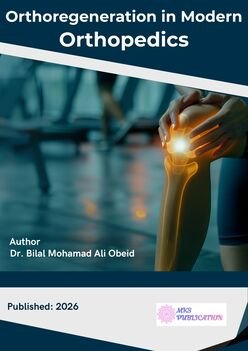
Book Title: Orthoregeneration in Modern Orthopedics
ISBN: 978-81-686334-1-4
Osteoarthritis (OA) and related musculoskeletal disorders represent a global health burden of unprecedented scale, affecting an estimated 528 million individuals worldwide and ranking among the leading causes of pain, disability, and reduced quality of life. Articular cartilage — the primary tissue implicated in joint degeneration — is avascular, aneural, and possesses negligible intrinsic regenerative capacity. Conventional management, encompassing analgesia, physiotherapy, intra-articular corticosteroids, and, ultimately, total joint replacement, addresses symptoms without modifying the underlying biological pathology. In younger and active patient populations, arthroplasty carries unacceptable long-term limitations including implant longevity, activity restriction, revision risk, and the progressive loss of bone stock. This clinical reality has catalyzed a paradigm shift toward joint preservation strategies that aim to maintain, restore, or enhance the biological integrity of the native joint.
Citation
Obeid, B. M. A. (2026). Orthoregeneration in Modern Orthopedics (1st edn). MKS Publication. https://doi.org/10.5281/zenodo.23757094